In Oracle Database 19c, tables are typically stored as heap-organized tables, where data rows are stored without any particular order and indexes are created separately.
However, Oracle also supports Index-Organized Tables (IOTs), where the table data itself is stored in a B-tree index structure. In this architecture, the primary key index and table data are stored together, eliminating the need for a separate table lookup.
Because the data is stored inside the index, Oracle can retrieve rows directly through Index-Organized Table Scans, improving performance for certain workloads.
1. What is an Index-Organized Table (IOT)?
An Index-Organized Table is a table where the rows are stored sorted by the primary key inside a B-tree index structure.
Unlike traditional tables:
- There is no separate heap table
- The primary key index stores the actual row data
Structure comparison:
| Table Type | Data Storage |
|---|---|
| Heap Table | Data stored in table blocks, indexes separate |
| Index-Organized Table | Data stored directly in the primary key index |
2. Creating an Index-Organized Table
Example:
create table tb_iot ( id number(4) primary key, name varchar2(10) not null) organization index;
Here:
idbecomes the primary key index- The table rows are stored inside the index
Check Indexes:

Note: Oracle create the index name “SYS_IOT_TOP_71067”
Check Segment Name:

Note: The segment name is the name of the index not the name of the table
3. How IOT Scans Work
When querying an Index-Organized Table, Oracle accesses rows directly through the index structure.
Typical process:
- Oracle searches the B-tree index
- The index already contains all row data
- No additional table lookup by ROWID is required
This reduces I/O operations.
4. Types of Access Paths for IOT
Oracle may use several access methods when scanning an Index-Organized Table.
4.1. Index Unique Scan
Occurs when searching by primary key.
Example:
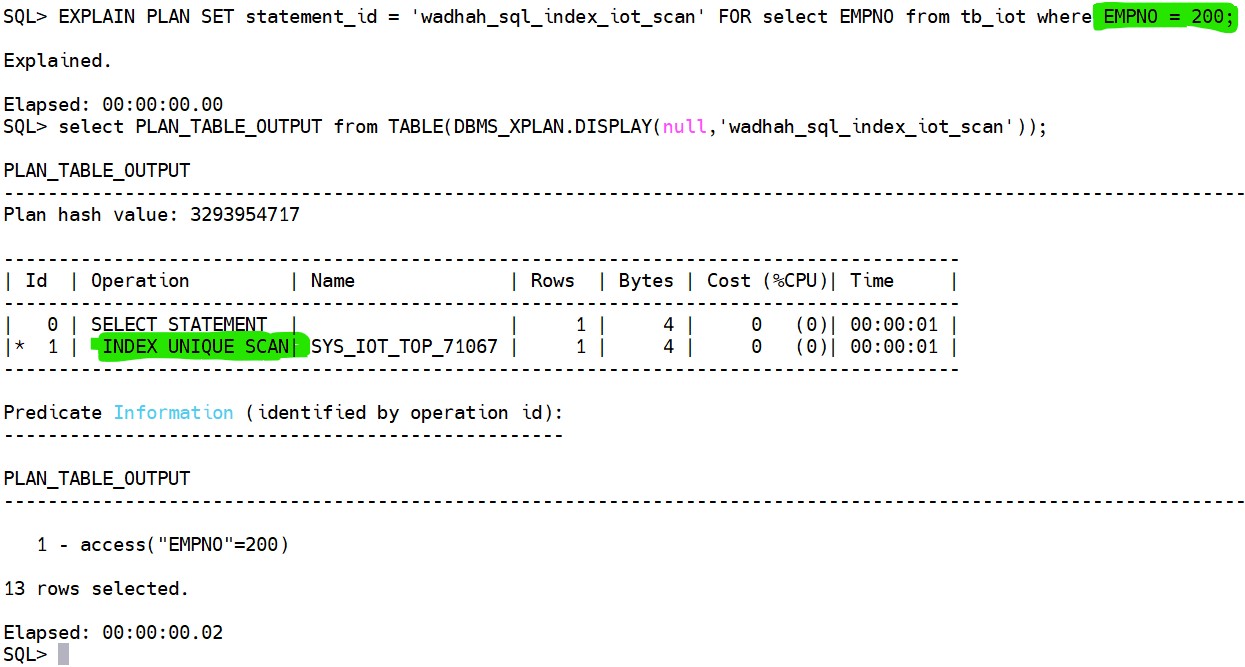
Fast direct access to the row.
4.2. Index Range Scan
Occurs when retrieving multiple rows in a key range.
Example:
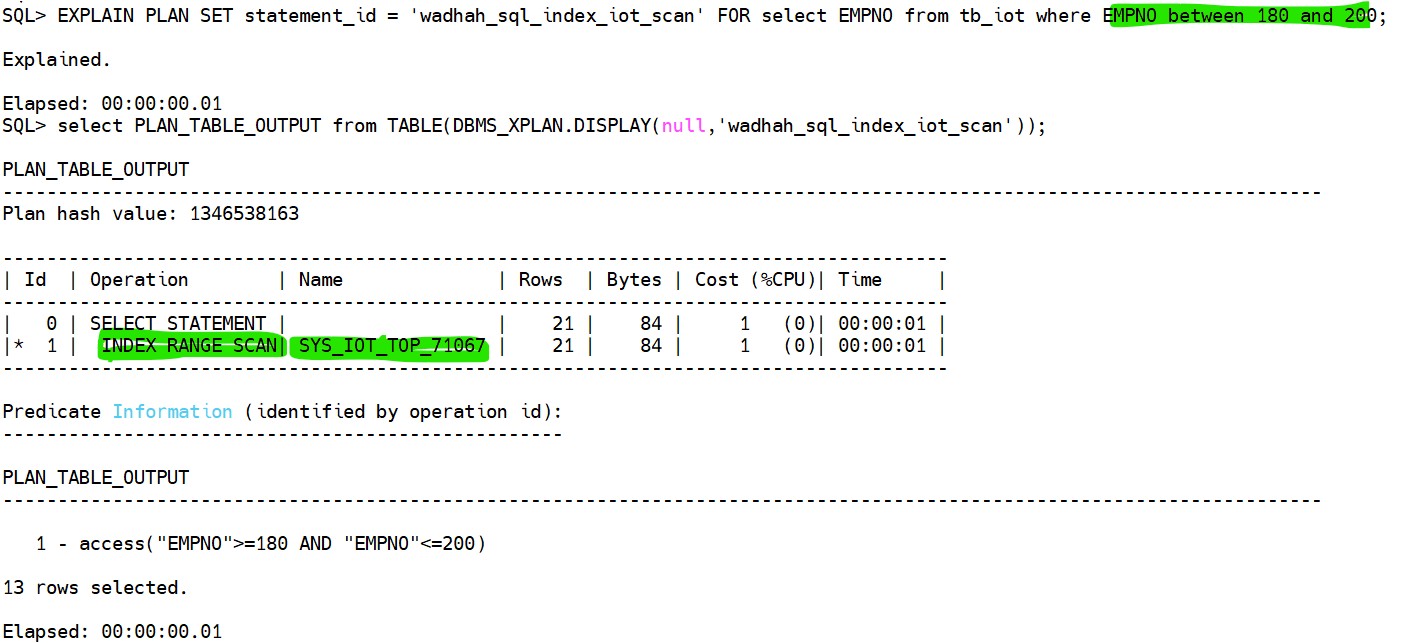
Oracle scans the index sequentially.
4.3. Full IOT Scan
If no index condition is provided, Oracle scans the entire index structure.
Example:
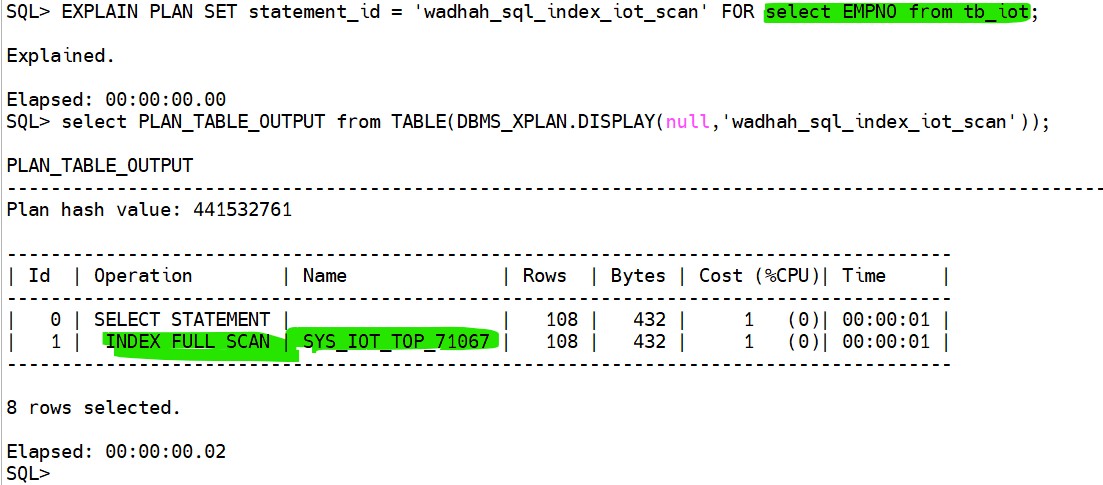
This is equivalent to scanning the entire table.
5. Advantages of Index-Organized Tables
- Reduced I/O: Data and index are stored together, eliminating extra table lookups.
- Faster Primary Key Access: Direct access using the index.
- Reduced Storage: Only one structure instead of table + primary key index.
- Efficient Range Queries: Because rows are physically stored in primary key order.
6. Limitations of IOT
Despite their advantages, IOTs have some limitations:
- Not ideal for frequent updates to primary key
- Large rows may require overflow segments
- Secondary indexes may require logical ROWIDs
7. When to Use Index-Organized Tables
IOTs are best suited for:
- Primary key lookup tables
- Read-heavy workloads
- Applications that frequently access rows by primary key
- Range-based queries on primary key
Typical use cases:
- Lookup tables
- Reference data
- Small transactional datasets
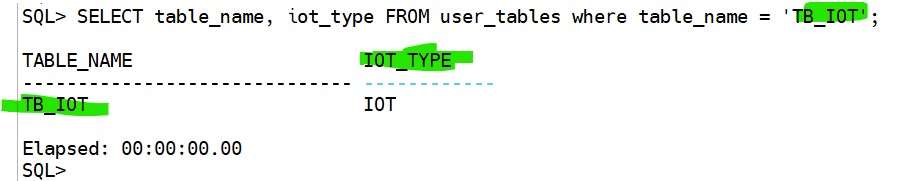
8. Checking if a Table is IOT
You can verify if a table is index-organized:
Conclusion
An Index-Organized Table (IOT) in Oracle 19c stores table rows directly inside a B-tree index based on the primary key. This structure eliminates the need for a separate table lookup and allows Oracle to retrieve rows efficiently through index-based scans.
 Google+
 Facebook